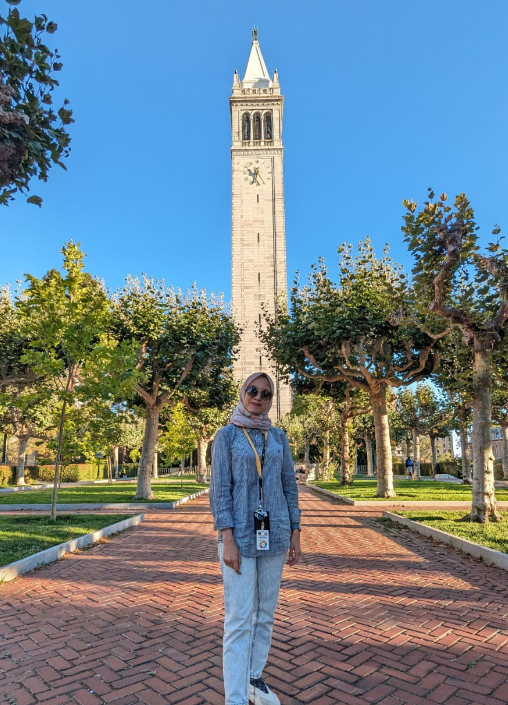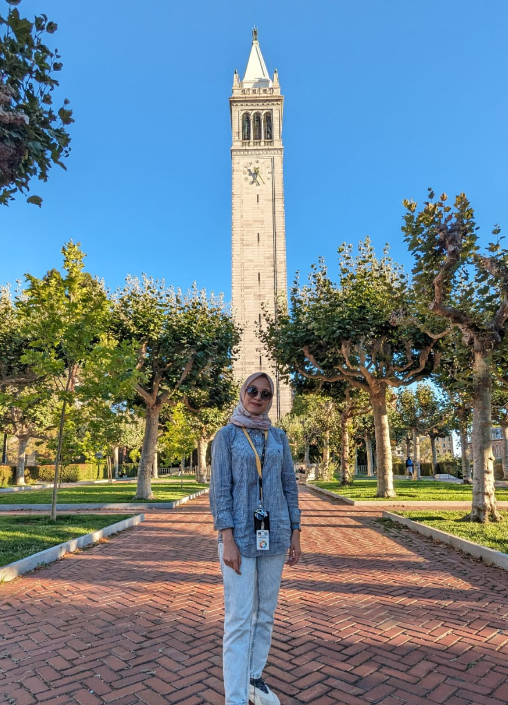
Shreejal Luitel: “Learning through assumptions paves the way for curiosity and critical thinking.”

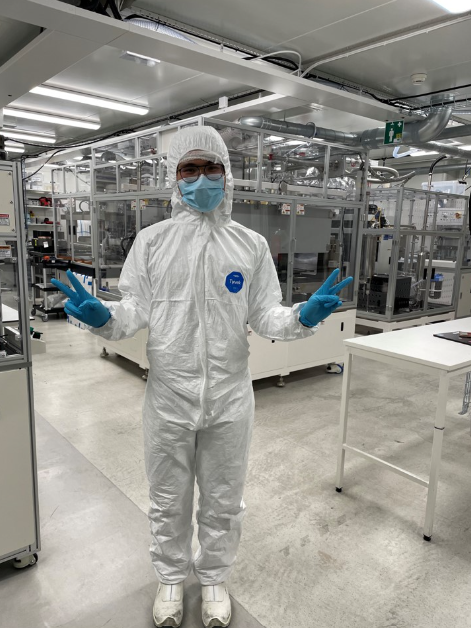
Shreejal Luitel earned his B.S. and M.S. in Industrial Engineering and Operations Research from the University of California, Berkeley in 2024 and 2025, respectively. His journey with GLOBE began through the Ambassador program in Taiwan, later joining the GLOBE staff as a Peer Advisor. During this time, he launched the inaugural class of the Foundations of Machine Learning (FOML) program for high school students from underserved backgrounds at UC Berkeley, inviting them to explore real-world data and technology through hands-on projects. Beyond his work with GLOBE, Shreejal has leveraged engineering, data, and optimization to address complex problems at the intersection of technology and society. He currently works in Research and Development at Pfizer.
Q&A with Shreejal
This interview was conducted while Shreejal was completing his graduate studies at UC Berkeley.
Summary of who you are and what is the program that you created:
I am someone who is naturally curious and drawn to interdisciplinary thinking, with a deep rooted passion for teaching and mentoring others. My journey with GLOBE began as an Ambassador traveling to Taiwan, where I gained a global perspective and came to truly appreciate the value of cross cultural understanding. That experience inspired me to become a Peer Advisor and eventually led me to create a Machine Learning course designed to empower students from underserved backgrounds. With the support of GLOBE and an incredible team, I developed and taught the curriculum and it was deeply rewarding to see our students leave the course with a genuine love for machine learning and optimization.
Outside of academics, I enjoy hiking, traveling, and meditating, among many other interests. I am currently studying Industrial Engineering and Operations Research at UC Berkeley, where I continue to explore the intersections of technology, people, and data.
In 2024 I graduated with my Bachelors degree in Industrial Engineering and Operations Research and in May 2025, I will graduate with my Masters degree also in Industrial Engineering and Operations Research.
What is your affiliation with GLOBE and how has this helped you to create your program?
I began my GLOBE Journey as an Ambassador where I received the opportunity to travel to Taiwan, alongside a cohort of nineteen other students. In the process, I learned more about life beyond the classroom. That is, how cultures shape human perspectives, politics and technology. It was during that trip that I met Hazel Narvaez (Assistant Director, International Programs), who first encouraged me to become a Peer Advisor. Although I was eager, it would take me nearly a year to fully realize that goal and I’ve been working as a Peer Advisor ever since.
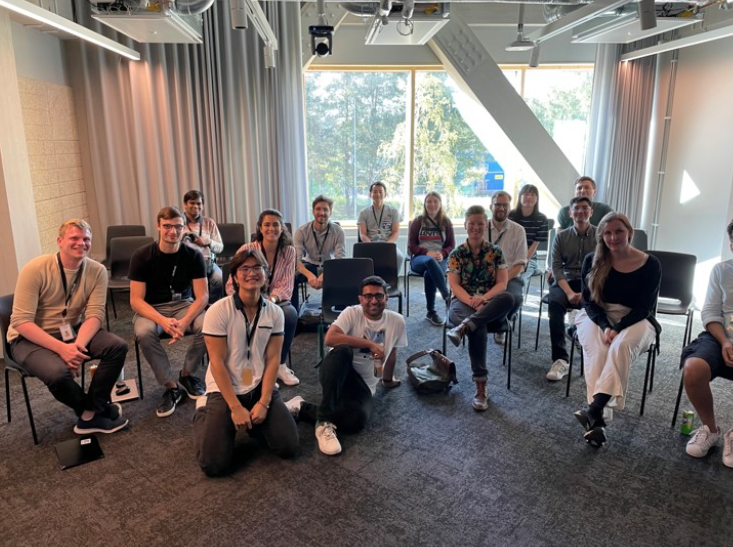
I’ve found that GLOBE very much prides itself on giving back to the community and I hoped that in my last semester at Berkeley, I could leave one more thing that would endure for years and carry forward even after my time here ended. I love to teach and similarly, I love to give back. Initially, I brought up the idea to Hazel of establishing a program to teach Machine Learning to students who had come from underserved backgrounds and she was extremely receptive to the idea. Hazel organized a call with the remainder of the GLOBE staff who had entrusted me to recruit students, develop the curriculum, and help teach the course. In less than a week’s time, we exceeded our quota of twelve students, and registered nearly twenty students for our inaugural cohort.
You would be surprised to see how in such a short period of time, that is less than two months, we were able to see the course through and most importantly, the students sincerely loved our curriculum. I’m glad to have been helped by Professor Phillip Kerger (assistant teaching professor, Department of Industrial Engineering and Operations Research) and my two friends Samantha Lee and Andrew Chan, who worked with me as part of the course team.

What is the focus of your program- how and why did you create it? What would you say was your ultimate goal in creating this program?
The primary aim of this Machine Learning course is to spark creativity, challenge conventional thinking, and most importantly, foster a spirit of interdisciplinarity in our students. Where certainty ends, creativity begins and that is the beauty of machine learning which inherently deals with uncertainty and in turn, optimization – so even beyond the math, ideas to solve problems require creative thinking and a very strong intuition.
I sincerely wish that I had been taught a lot of these concepts in a similar light, with intuition, creativity and a spirit that encourages interdisciplinary thinking. I hoped that I would be able to gift to the students a tool that I wish I had been encouraged to further refine in in early high school and undergraduate years alike. I think it is also incredibly important for us to reach out to expand opportunities in areas where few exist, level the playing field, and in turn, create an equitable environment where everyone can thrive.
You would think this is just a machine learning program, but I would say that it is far more. The blueprint’s been crafted, the foundations laid, and now it is time to refine the building.
What has been the most rewarding part for you during the duration of your program?
Truthfully, the whole course, in itself, was very much rewarding. However, I especially enjoyed being able to see the final presentations. For me, watching how each student brought their own creativity and perspective to the projects was incredibly fulfilling.
Some students decided to predict inflation, others creatively designed a bot that could locate medical supplies in emergencies and each group, in their own way, found a unique intersection between data and real world impact. It was inspiring to see how the concepts we explored in class came to life in such thoughtful, imaginative ways.

What has been one of the most challenging experiences in your academic journey so far? Do you have any advice on how to handle it?
For me, one of the most challenging experiences has been having too many varied interests. Some days, I feel deeply passionate about public policy and on others, I find myself completely immersed in data science. While it is exciting to care about so many fields, it can also feel slightly paralyzing, as if I am constantly at a crossroads and unsure which direction to commit to.
It is exciting to have so many passions and interests but at times, it makes decision making genuinely difficult. Two summers ago, I received advice from a friend who had navigated a similar struggle. He told me that rather than choosing between fields, his goal was to interweave seemingly diverging domains into something more meaningful.
He had started out studying neuroscience as an undergraduate, but eventually earned his doctorate in entrepreneurship. Today, he conducts research that blends both, exploring innovation and decision making in startups which really connects with so many differing fields. That conversation gave me a new lens, instead of feeling pressured to narrow myself down, I began seeing value in building intersections between the disciplines I care about.
What was the most valuable thing you have learned throughout your time at UC Berkeley and what advice would you give current or future UC Berkeley students?
I had come across a quote, many years ago, while scrolling through Twitter from Neil Degrasse Tyson, whom I’ve admired because I have loved astronomy from a young age, and he said, “As the perimeter of knowledge grows, so too does our ignorance.” I recalled that quote more recently.
I think my time at UC Berkeley has been very much an epitome of that very quote. I have loved to engage in interdisciplinary crafts and more importantly, loved to question. Perhaps, in part because of cultural differences, curiosity wasn’t something encouraged growing up because I had pondered about a lot of things that did not really have a clear purpose or be of material significance, and my folks were not always receptive to it.
I had encouraged folks to ask questions. Some of my Industrial Engineering and Operations Research professors, Phillip Kerger and Rajan Udwani, really encouraged questions in their classes. They taught in a way where they spent more time discussing the assumptions than the mathematical models we had discussed and I personally found that to be of great value because assumptions are based on intuition, and therefore, it is always good to challenge and rethink assumptions. Learning through assumptions paves the way for curiosity and critical thinking, qualities that are not always nurtured in every classroom. Not all professors approach their subjects this way, unfortunately, but when they do, it makes a real difference.
This is one of the many important things I have learned from Berkeley (it is hard to distill it all into one piece of advice). Learn the assumptions, ask questions and pay it forward! And, in whatever you do, be even-minded and kind.
As a Cal/ GLOBE alumni, what is next for you?
GLOBE allowed me to do so much from traveling abroad and engaging with global perspectives, to mentoring others and leading our inaugural on campus course. I feel very grateful. I will be starting at Pfizer in Cambridge, Massachusetts in Research this upcoming summer once I graduate and I am pretty excited!
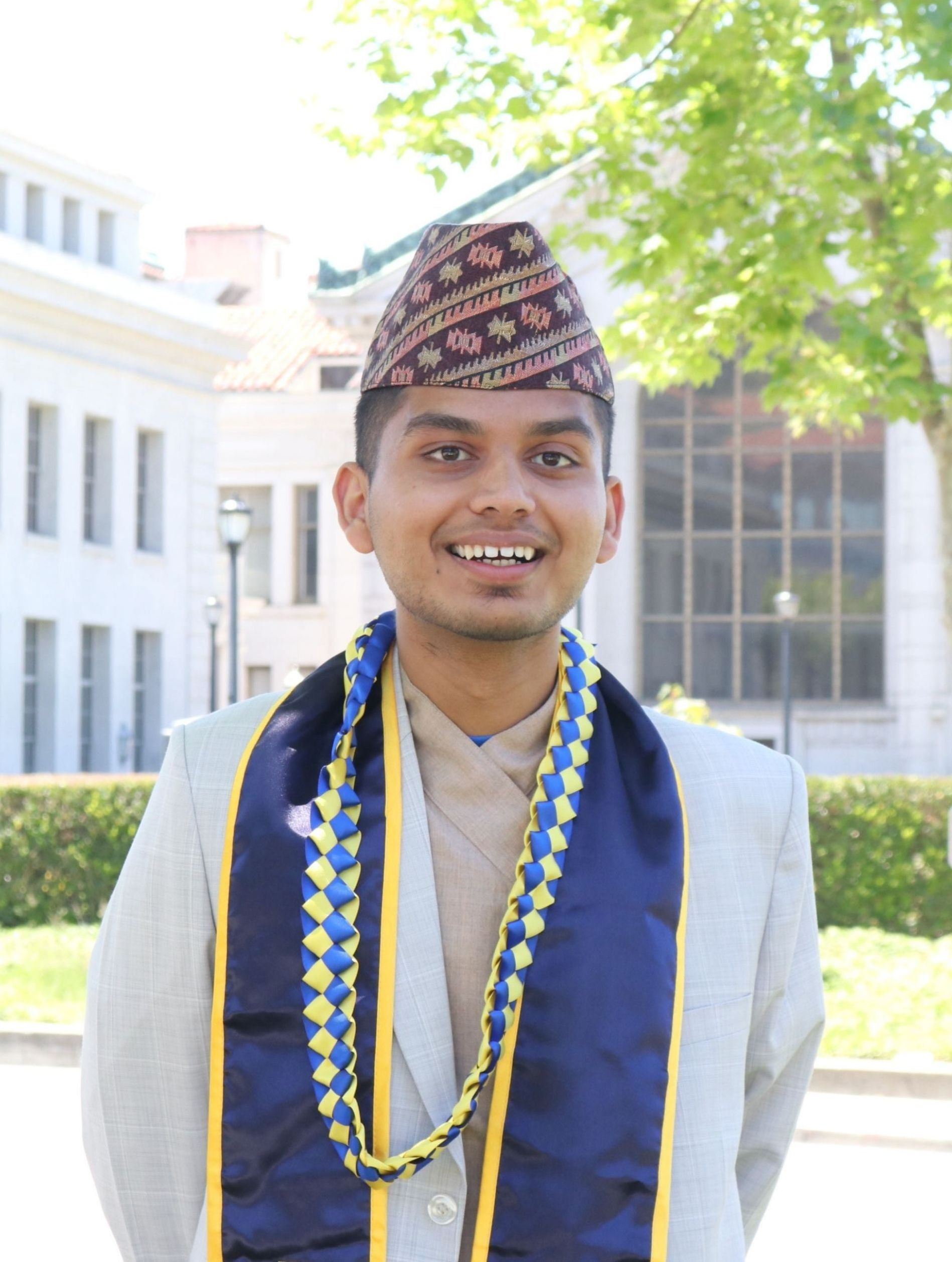
Shreejal Luitel
Shreejal Luitel works in Research and Development at Pfizer. He earned his B.S. and M.S. in Industrial Engineering and Operations Research at UC Berkeley and served as a GLOBE Peer Advisor, where he launched the inaugural Foundations of Machine Learning (FOML) program.