Berkeley Summer Academy of Science
Program Overview
Berkeley Summer Academy of Science (previously known as the “Berkeley Summer Academy of Sustainability”) is an intensive 2-week high school program designed to give a limited number of students a STEM field college experience. This project-based program combines lectures and laboratory sessions to give students practical experience in science and engineering. Students will learn scientific foundations of engineering, develop and transform their ideas into executable designs, and eventually build their own prototypes, which they will showcase during the Completion Ceremony.
The 2-week program is divided into two parts — class lectures and hands-on experimental lab opportunities. The 2026 theme is: “Foundations of Modern Science” and the course curriculum will focus on:
- Quantum: explore the history of this revolutionary principle as well as quantum materials, superconductivity and resistance.
- Optics & Lasers: learn about electromagnetic spectrum, optical fibers, and metamaterials.
- Semiconductors: dive into phases of matter, band theory, and optoelectronics.
- Quantum Tech: understand quantum building blocks, quantum computing, and applications in sensing and communication.
In addition to academic classes, students will be provided lunch and can experience college life, eating at Berkeley cafeterias, and interacting with UC Berkeley undergrad and graduate students. Participants will also have the opportunity to visit places such as Berkeley student labs and Silicon Valley companies.
This program allows students to meet new friends from around the world and build important life skills that can make their future college experience a success — all while strengthening their college application.
The program is limited to 36 students.

Program Dates
2026 Dates: July 20 – July 31
Class schedule example
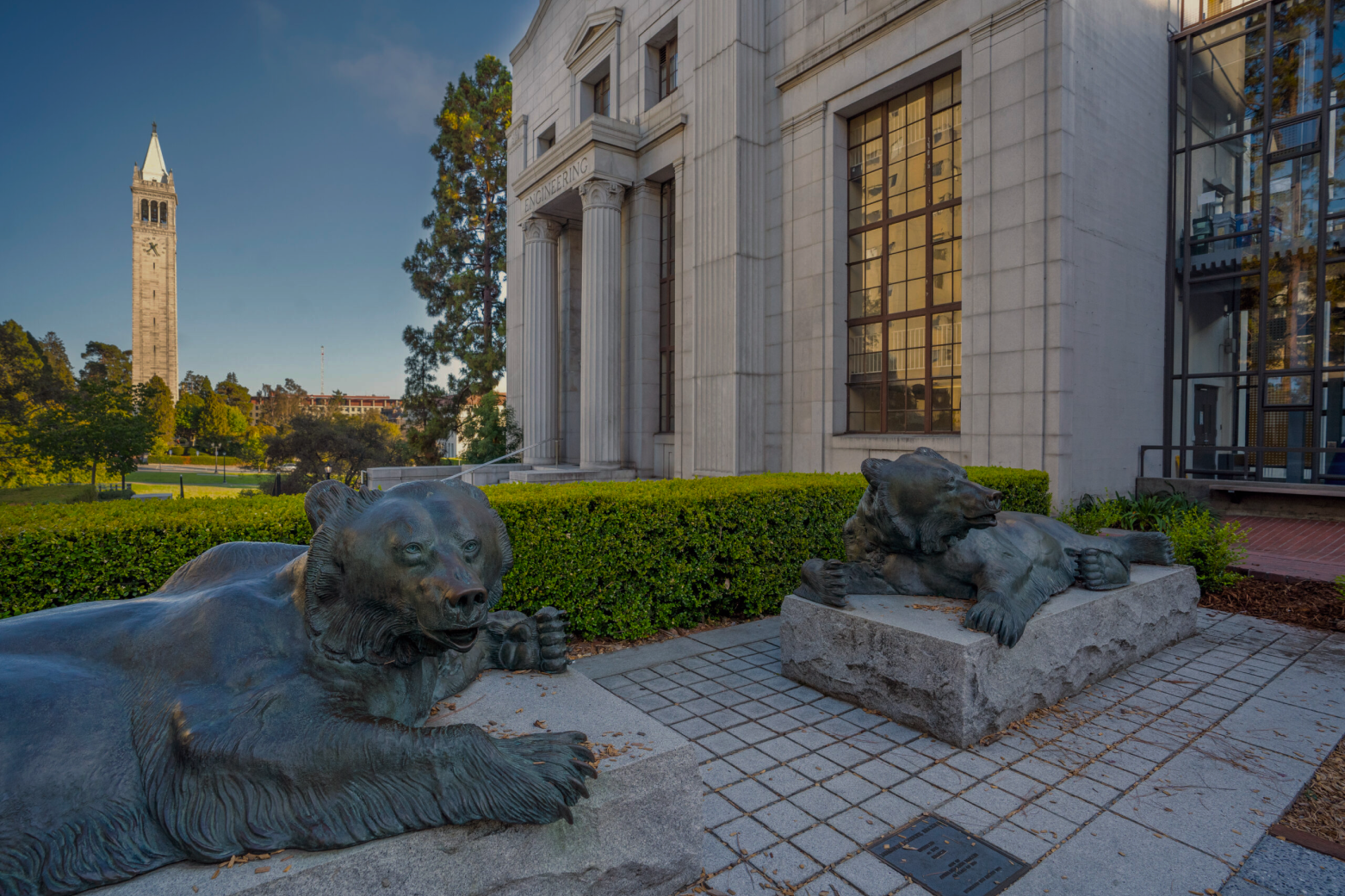
The two-week in-person program will be held at UC Berkeley’s College of Engineering lecture halls and lab facilities. Each day will consist of classes divided into two parts: morning lecture + afternoon lab.
The daily schedule will look something like:
| 9am-12pm | Lecture |
| 12-1pm | Lunch break |
| 1-4pm | Lab |
| 4pm | End of daily programming |
Program Price
Regular price: $5,500
The program price covers the cost of faculty, lab space, equipment/supplies, industry visits, administrative fees, and daily lunches.
Scholarships available to select individuals. The application for scholarships is available within the BSAS program application.
2026 Applications are Closed
Check back in January to apply for our 2027 program
About the Instructors (subject to change)
Dr. Junqiao Wu
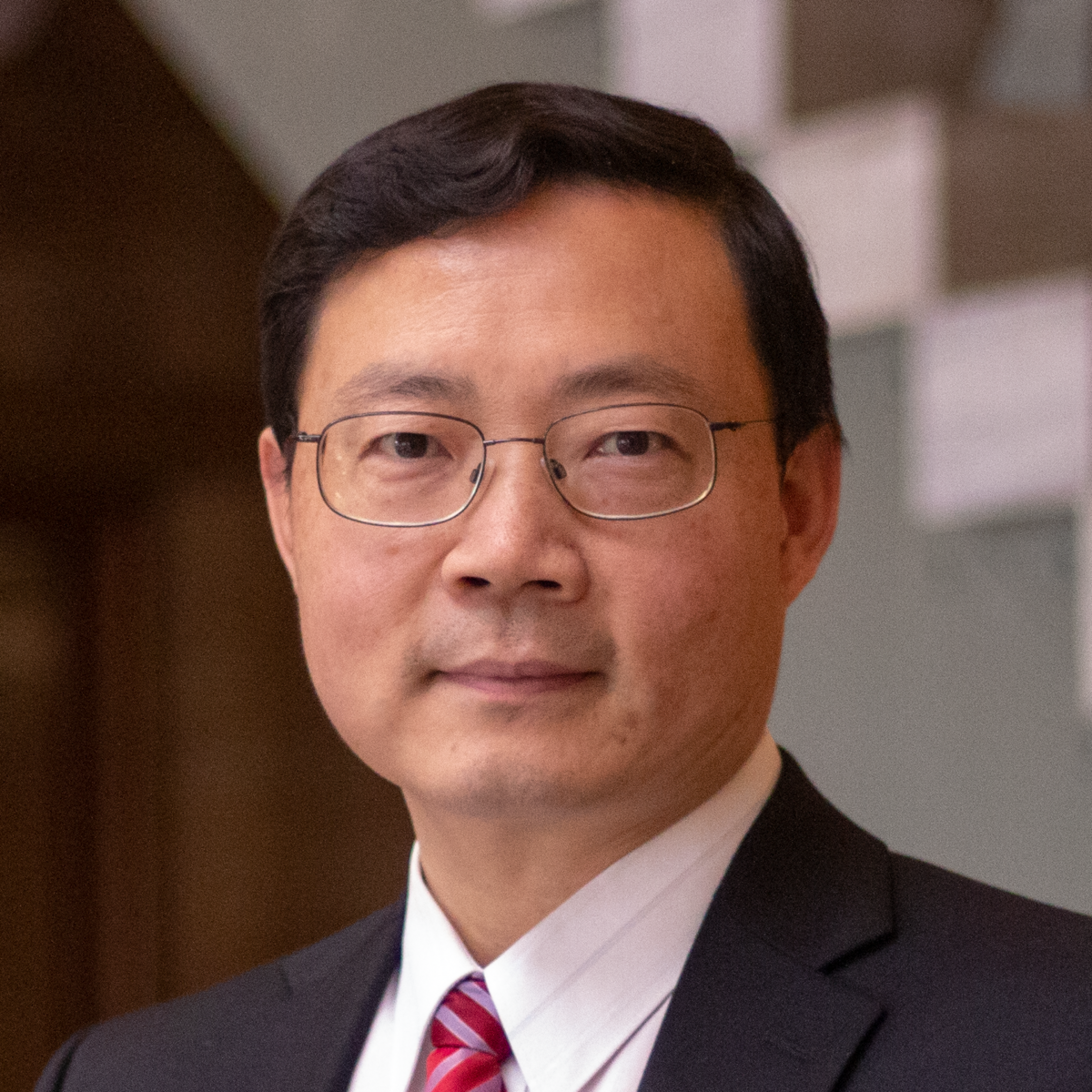
Dr. Junqiao Wu
Currently teaching: Properties of Electronic Materials, Individual Study or Research, Perspectives in Engineering
Professor Junqiao Wu received a B.S. from Fudan University and a M.S. from Peking University, China, both in physics. He obtained a Ph.D. degree in Applied Science and Technology from the University of California, Berkeley for work on semiconductors. He did postdoctoral research in the Department of Chemistry and Chemical Biology at Harvard University on nanomaterials. He is currently on the Chair line of the Division of Materials Physics of the American Physical Society (APS) and is the Chair of the UC Berkeley Department of Materials Science and Engineering.
Dr. Jie Yao
Dr. Jie Yao
Currently Teaching: Optical Materials and Devices, Properties of Materials, Individual Study or Research, Group Studies, Seminars, or Group Research
Prof. Jie Yao obtained his PhD from the University of California, Berkeley in 2010 and conducted postdoctoral research at Stanford University. He joined the Department of Materials Science and Engineering at UC Berkeley as an assistant professor in 2013. His research interests are focused on optical materials for nanophotonic applications, including optical sensors, communication devices, etc. Recently he is also developing new material platforms for low-power optoelectronic devices that are essential to future sustainable infrastructures and biomedical applications.
Dr. Joel Ager

Dr. Joel Ager
Currently Teaching: Group Studies, Seminars, or Group Research, Individual Research
Joel W. Ager III earned his PhD in Chemical Physics from the University of Colorado in 1986, following an A.B. in Chemistry from Harvard College. He is a Senior Staff Scientist in the Materials Sciences Division at Lawrence Berkeley National Laboratory and an Adjunct Professor of Materials Science and Engineering at UC Berkeley. Ager’s research focuses on the electronic and transport properties of photovoltaic and semiconducting materials, the development of earth-abundant photoanodes and photocathodes for solar fuels production, and the discovery of new oxide and sulfide transparent conductors. His work advances clean energy conversion, solar-to-chemical fuel technologies, and next-generation electronic materials. In addition, he has authored more than 350 peer-reviewed publications and frequently speaks at international scientific conferences.
Dr. Shimon Kolkowitz

Dr. Shimon Kolkowitz
Currently Teaching: Individual Research, Seminars for Graduate Students, Introduction To Quantum Computing I
Shimon Kolkowitz earned his PhD in experimental physics from Harvard University in 2015 and his BS in Physics, with distinction, from Stanford University in 2008. He is an Associate Professor of Physics at UC Berkeley and the Herst Chair, following previous faculty appointments at the University of Wisconsin–Madison and postdoctoral work at JILA/NIST/CU Boulder. Kolkowitz’s research focuses on quantum sensing, precision measurement, and metrology, with his group pioneering new techniques for ultra-precise optical atomic clocks and nanoscale measurement tools based on atom-scale defects in diamond. His work advances fundamental tests of relativity, timekeeping, quantum optics, and next-generation quantum sensors. He is a recipient of the Packard Fellowship, the Sloan Research Fellowship, and the NSF CAREER Award.
Info Session
Interested in learning more about this program? View a recording of our info session below
Donate and Make this Summer Count
Want to help a student experience one of GLOBE’s Summer programs? Your generosity directly funds scholarships for students who need financial assistance. Give the gift of a great summer today!
FAQ
What is the program objective?
This project-based program combines lectures and laboratory sessions to give students practical experience in engineering design processes. Students will learn to transform their ideas into executable designs.
Who is eligible to apply?
High School students (ages 15-17 by the start of the program) with a basic understanding of STEM and an interest in exploring prototypes and design.
Ideally, students should have taken calculus and physics, but we welcome students who have taken algebra and one science class to apply.
What materials/information are required on the application?
Students will be asked to provide some information and respond to short answer prompts on the application.
Students interested in applying for a scholarship will additionally be required to submit their resume, transcript, and a Letter of Reference.
How many seats are available?
This program is limited to 36 students.
When should I apply? When will I hear about my application result?
Applications open around early January and close March 31 each year. Apply before the deadline to be considered for the program.
BSAS is a very competitive program and we appreciate your patience as we read through each application. We will release program admission and waitlist results around 2-4 weeks after the application deadline.
Is there an info session?
We will host an info session for BSAS 2026 soon. Register above to be added to our mailing list.
For those unable to attend, we will post the recording and slides here afterwards.
Is housing provided?
No, housing is NOT provided.
Students should live in the area and commute to campus for the program.
Program price
The total cost for BSAS 2026 program is $5,500. We offer scholarships to select students (see program application for details – scholarship applications are due with your BSAS application).
The program fee cover the cost of tuition, course materials, lunch, field trips, administrative fees, and lab space. Additional personal expenses are not covered.
Refunds & Cancellation Policy
There is a non-refundable $500 processing fee for all participants.
If a student withdraws more than 2 months before the official program start date, 50% of the program fees, minus the processing fee, will be refunded. For example, if the program costs $10,000, the refund amount will be $4,500 ($10,000 x 50% = $5,000 – $500 = $4,500).
Withdrawal requests received less than 2 months from the program start are nonrefundable.
Contact us
We’d love to hear from you and answer any questions you may have. Send us an email if you have any questions!
GLOBE Office:
Grimes Engineering Center Room 310
University of California, Berkeley
Berkeley, CA, 94704
Email: globesummer@berkeley.edu